Energy-as-a-Service (EaaS)
solutions delivering reliable power to off-grid and unstable-grid.

About
Energy-as-a-Service + EV Charging Hubs (Microgrid systems)
Brooh Energy offers Energy-as-a-Service (EaaS) by deploying EV charging hubs (microgrid systems) that do more than just charge vehicles. These hubs provide dependable, off-grid power to agro-processing centers, industrial parks, telecom towers, health facilities, and productive energy uses, unlocking economic opportunities and addressing critical energy needs.
Solutions
EV Charging Hubs
Off-grid EV charging hubs not only enable electric mobility but also serve as local energy anchors, powering businesses and accelerating economic activity
Health Facilities
Reliable off-grid power is vital for health facilities, ensuring continuous operation of essential medical equipment, lighting, and refrigeration. Electrified clinics deliver better care and improve outcomes in off-grid regions..
Productive Use of Energy (PUE)
Example: Electrifying milling operations with renewable energy enhances food production, reduces post-harvest losses, and increases local incomes. It enables small-scale farmers and entrepreneurs to process crops efficiently and sustainably.
Solutions
Agro-Processing Centers
Enables the value addition of agricultural products, supporting storage, drying, packaging, and processing. Electrified agro-processing increases food security, boosts rural economies, and reduces waste.
Industrial Parks + Micro Parks
Power industrial zones, Micro parks where grid access is unreliable or unavailable. Reliable energy supports manufacturing, creates jobs, and attracts investment in emerging economic zones.
Telecom Towers
Powering telecom towers with off-grid energy solutions ensures uninterrupted connectivity in remote areas. Stable communications infrastructure supports education, commerce, emergency services, and digital inclusion.

The Decentralized Renewable Energy (DRE) Revolution
https://dre.energydata.info/about
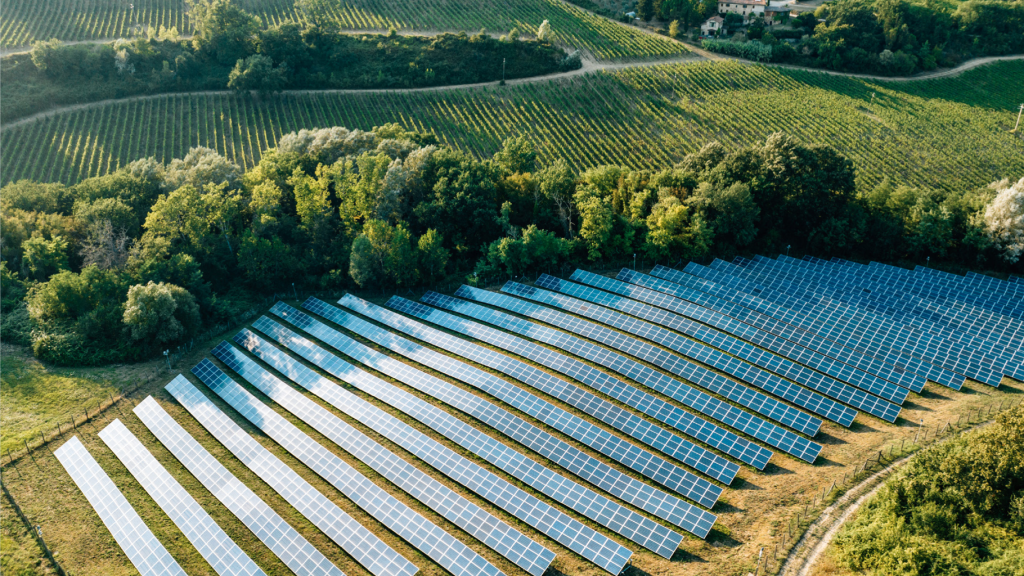
Decentralized Renewable Energy (DRE) typically consists of installing solar panels, ranging from small to large systems, integrated with battery storage. DRE systems are agile, financially accessible, resilient, and can deliver grid quality electricity. In certain settings, DRE is already proving to be more cost effective than traditional diesel powered systems. For instance, in parts of South Asia, the deployment of standalone rooftop solar systems has reduced energy costs for micro, small, and medium enterprises from $0.17/kWh with diesel to as low as $0.04/kWh. This enabled local businesses, such as grain mills, to significantly increase productivity.
Across low and middle income regions, there is a unique opportunity to leapfrog the traditional centralized energy model and transition to a more distributed approach to electrification, especially in areas that remain off grid, including remote islands and other
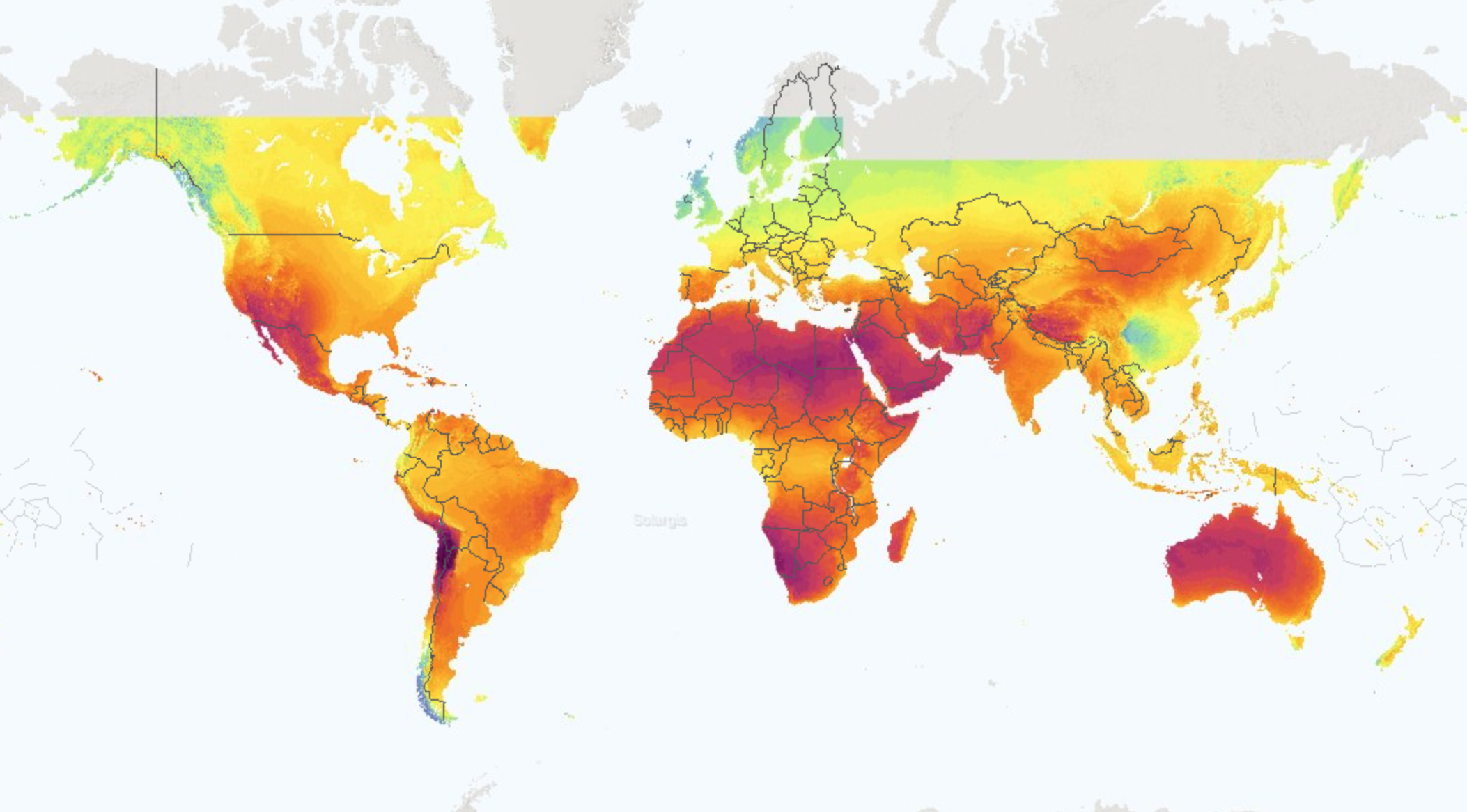
Solar PV Power Potential by Country
https://www.worldbank.org/en/topic/energy/publication/solar-photovoltaic-power-potential-by-country
The World Bank’s report “Solar Photovoltaic Power Potential by Country” provides the first global, harmonized assessment of solar PV potential, distinguishing between theoretical, practical, and economic capacities. It shows that in most countries, practical solar potential far exceeds current electricity demand. About 93% of the global population lives in areas receiving an average daily solar yield between 3.0 and 5.0 kWh per kWp, with around 70 countries, mostly in Africa, the Middle East, and parts of the Americas and Asia, classified as having “excellent” potential above 4.5 kWh/kWp. Many of these regions also experience relatively mild seasonality, allowing for consistent year-round solar output. In some countries like Ethiopia and Mexico, as little as 0.005% to 0.1% of land area could meet total national electricity needs. The study, developed with Solargis under the World Bank’s ESMAP initiative, aims to guide policymakers and investors in expanding solar energy deployment to boost electrification, economic development, and energy resilience.
Expertise
Scott Sklar,
Advisory Board Member
Clean Energy Pioneer, Thought Leader, Advisor, and Mentor
Professor Scott Sklar is a trailblazer in the U.S. clean energy sector with over four decades of transformative leadership. As the founding Executive Director of the Solar Energy Industries Association, he helped shape the modern solar industry, advocating for favorable policies and market conditions that accelerated renewable energy adoption nationwide. He worked closely with Congress, co-founding the Congressional Solar Caucus and driving landmark clean energy legislation in the 1970s. Professor Sklar currently serves as Sustainable Energy Director at George Washington University’s Environment and Energy Management Institute (EEMI) and as Director of the George Washington Solar Institute. He is also the Founder and President of The Stella Group, Ltd., a global strategic consultancy that integrates distributed energy technologies including photovoltaics, energy storage, microgrids, and fuel cells into resilient, financeable systems for clients worldwide.
His leadership has influenced both national energy strategy and on-the-ground deployment, from high-level advisory roles to technical implementation. Prior to launching The Stella Group, he held key positions such as political director for The Solar Lobby, director at the National Center for Appropriate Technology, and energy and military aide to Senator Jacob Javits of New York. He has authored foundational texts like The Forbidden Fuel and The Consumer Guide to Solar Energy and continues to publish research on community solar, grid resilience, and equitable energy financing. Recognized for his lifelong contributions, he has received honors including the Charles Greeley Abbot Award from ASES and the Green Patriot Award from George Mason University.
The Story of the Two Buildings: Living the Mission, Mentoring the Future
Beyond the classroom and policy arena, Professor Sklar exemplifies clean energy leadership in his daily life through his solar-powered home and office in Arlington, Virginia. These two buildings, located near the Clarendon Metro station, serve as living laboratories for sustainable infrastructure. His residence features solar water heating, advanced insulation, multiple photovoltaic arrays, battery storage, geothermal HVAC, and electrochromic smart windows. The Stella Group office, located just behind the house, is a clean energy showcase equipped with solar shingles, a small wind turbine, a hydrogen fuel cell, LED lighting, and solar daylighting systems. Even the walkway between them features nanotechnology photovoltaic-powered lighting.
These buildings are more than demonstrations. They are central to Professor Sklar’s role as a mentor. He regularly hosts student tours, giving mentees firsthand exposure to real-world applications of renewable technologies. His guidance has shaped emerging professionals in policy, engineering, and urban planning, offering them not only technical insights but also a long-term vision for sustainable, resilient communities. In this way, Professor Sklar’s legacy is not only in the systems he has helped deploy but in the future leaders he continues to inspire.
Richard Orth Colonel (Retired),
Advisory Board Member
Advisory Board Member | Government Affairs and Strategic Partnerships
With over 39 years of leadership at the intersection of international security, government engagement, and infrastructure development, Rick brings deep experience supporting mission-driven organizations across Africa and beyond. His work has spanned U.S. government agencies including the Department of State, Department of Defense, and the Defense Intelligence Agency, as well as private sector companies such as AECOM, Michael Baker International, and Day & Zimmermann.
As Managing Director of Ambessa Solutions, he advises on political and operational strategy, including defense, infrastructure, and capacity-building initiatives. His insights into African governance, security cooperation, and public-private partnerships make him a valuable asset to organizations operating in complex or frontier markets.
Having led multi-million-dollar projects across more than 20 countries, he offers critical guidance on navigating regulatory environments, building trusted relationships with public stakeholders, and aligning programs with national development priorities. Fluent in French and conversant in Swahili, he brings both diplomatic fluency and operational depth to the board.
Advisory Focus
• Government and donor engagement in Sub-Saharan Africa
• Public-private partnerships and international development
• Security and infrastructure in fragile and emerging markets
• Strategic positioning and proposal strategy
Allen Gilstrap,
Advisory Board Member
CEO and Co-Founder with expertise in leading the launch and national expansion of VC-funded tech startups, serving as CEO of Biosponge, Open Revolution, and Ongo. Twelve years of senior executive experience at American Express in London and New York City. Duke MBA.
Currently, he serves as CEO and Co-Founder of Free Land Solar, a company advancing Distributed Generation (DG) in solar energy, enabling businesses to produce power at their own locations. He has held leadership roles in multiple energy companies focused on delivering efficient solutions, driving growth and strategic development across the sector.
Beyond energy, Gilstrap has a strong background in financial services, where he helped build technology-enabled payment businesses on a global scale. He also holds a degree from the University of Kansas, reflecting a solid academic foundation that supports his diverse professional accomplishments.
Beruh T. Bekele
Co-Founder, Managing Partner
Beruh Tesfaye is a strategic advisor, entrepreneur, and co-founder with over nine years of experience leading ventures across the U.S. and East Africa. With a background in information technology and a passion for impact-driven business, he has co-founded and managed successful companies in solar energy, recycling, coffee production, and hospitality. He brings a deep understanding of the off grid product supply chain, including direct negotiations with suppliers on pricing, logistics, and product development to meet local market needs. Combining entrepreneurship, social impact, and business development, his work focuses on unlocking scalable solutions in emerging markets.
Sam Tesfaye
Co-Founder, Managing Partner
With over a decade of experience advancing clean energy access across Africa and emerging markets, Sam brings deep expertise in strategy, execution, and strategic insight. He has led the design and deployment of off-grid solar and productive use energy systems through innovative Energy as a Service models. His company was selected by development partners including the Shell Foundation, USAID Power Africa, and FCDO to accelerate energy access in Ethiopia by reducing market barriers and unlocking private sector capital.
Currently, Sam works alongside renowned clean energy expert Professor Scott Sklar, contributing to policy-informed microgrid and solar plus storage initiatives tailored to underserved markets. This collaboration integrates policy insight with practical implementation, advancing scalable, distributed infrastructure. A multidisciplinary professional, he operates at the intersection of energy, IT, social enterprise, and development finance, offering a systems-level view of climate and energy solutions. He actively engages U.S. suppliers and global partners through the U.S. Commercial Service and Embassy Deal Teams.
Throughout his career, Sam has led partnerships with development finance institutions, universities, and local governments. He also led a project supported by the National Endowment for Democracy (NED). His work has been recognized with the USAID African Diaspora Market III Award, and he is a member of the U.S.–Africa Clean Tech Network.
In addition, he was invited by Debre Berhan University to lead energy sector initiatives and signed a memorandum of understanding (MOU) with the university to co-develop off-grid energy solutions, implement microgrids, and promote productive uses of energy (PUE), including conducting needs assessments for PUE applications.
Jeffrey Morrissey
Advisor | Business Development
A seasoned business development professional with decades of experience across Africa, Jeffrey Morrissey brings deep market insight, strategic acumen, and a strong network spanning the continent. His career reflects a commitment to building sustainable ventures and forging impactful partnerships in emerging markets.

Contact
Your message has been sent

© 2017 – 2025 Brooh Energy
Energy-as-a-Service | Microgrid Systems | Off-Grid Energy Solutions | EV Charging Hubs.
